What Type of Audio Amplifier Is Best?
Trust Your Ears to Find the Ideal Sound Profile for Your Home
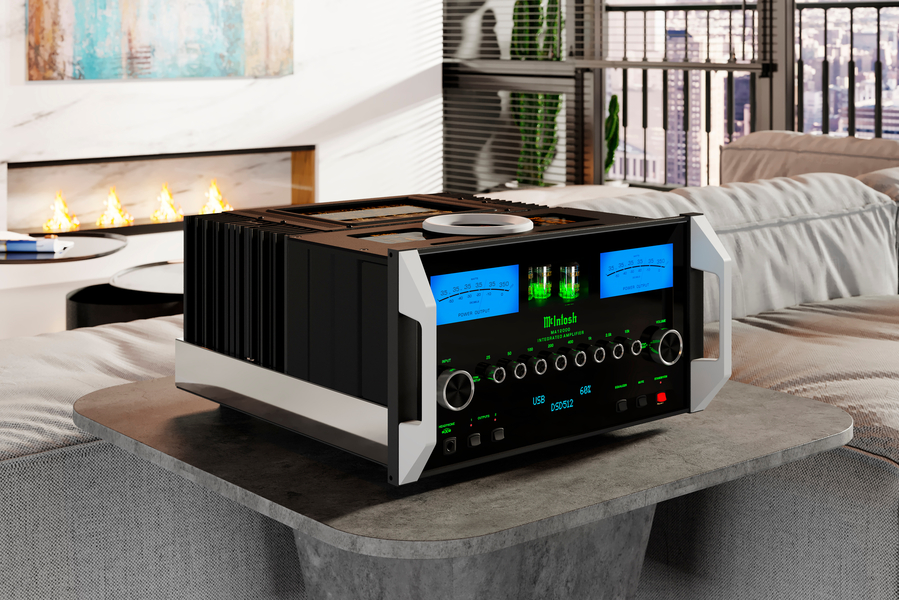
For many audiophiles, the holy grail is crystal clear sound. To them, an audio amplifier should be a "straight wire with gain," meaning it should increase signal strength without altering the original recording in any detectable way. This philosophy prioritizes technical accuracy and the artist's intent. But what is neutral on paper may not always provide the most rewarding listening experience.
Everyone has a unique relationship with music. So why do so many people end up with one-size-fits-all high-end audio systems by basing selections entirely on technical specs? We love helping our Boston, MA, clients navigate these choices and move past industry jargon to focus on their own preferences. What do they listen to? What characteristics of their favorite recordings do they connect with the most?
The Case for Sound Purity
For many purists, the goal is to hear exactly what the recording engineer heard in the studio. Relying on high-quality solid-state or Class D amplification, neutral models aim for near-zero distortion and a flat frequency response. These amplifiers are excellent for those who appreciate clinical detail and want to hear every breath, finger slide, and key stroke.
When an amplifier is designed for absolute transparency, it showcases the strengths of a high-resolution recording. However, it is also unforgiving, exposing the flaws in lower-quality tracks or older recordings. This "uncolored" approach is ideal for dedicated listening rooms where the acoustic environment is carefully controlled, and the listener wants an unfiltered connection to the high-quality source material.
The Case for Sound Coloration
The counter-narrative to total transparency is the idea that a subtle bit of character, or "coloration," can actually enhance the musical experience. Coloration occurs when a piece of equipment subtly alters the tonal balance or harmonic structure of the audio signal. Some see this as a departure from the "truth.” To others, it adds a sense of presence and soul that a purely neutral system lacks.
- Vacuum Tube Amplification: This is the most famous example of intentional coloration. Tubes introduce even-order harmonic distortion, which the human ear often perceives as "warmth" or "musicality." They tend to round off the sharp edges of digital recordings to give them a three-dimensional quality that makes vocals feel more lifelike and engaging.
- Class A Circuitry: Class A designs are prized for their smooth sound. Because they avoid the distortion caused by component hand-off, you get a smoothed-out sound that to some, sounds more comforting than a more neutral, ‘clinical’ sound.
Finding the Sound That Suits You
The "best" system is the one that encourages you to listen more often. Relying solely on specifications can lead to a system that performs well in a lab but fails to resonate in your living room. We argue that your personal enjoyment is more important than achieving laboratory neutrality.
There’s nothing wrong with preferring neutrality or warmth. The goal is finding a sound that makes you want to keep the music playing. By trusting your own ears, you build a system that reflects your personal tastes rather than adhering to a rigid industry standard.
At our firm, we believe in selling clients what they need to enhance their daily lives, not just what is trending in audiophile forums. We encourage you to visit our showroom and test out some of our models to get a feel for what coloration, or lack thereof, feels right to you. Call us or fill out our contact form to schedule a one-on-one demo.